
Program Overview
Our Networking and Cybersecurity degree challenges you to put course concepts into action through the breadth and depth of our courses. The program includes courses in networking, routing and switching, Linux, PowerShell, ethical hacking, digital forensics, systems administration, programming, scripting, and more.
General education requirements help you master the math and communication skills that cybersecurity professionals use daily. The program also features a series of games, competitions, and other applied learning projects.
-
Careers in Networking and Cybersecurity
A degree in networking and cybersecurity opens doors to rewarding careers with high salaries, strong job stability, and new challenges every day. Graduates of networking and cybersecurity programs can find work in both the public and private sectors across many industries, all of which rely on trained professionals to safeguard data.
Career Snapshot: Network Support Specialists
- Median Salary: $62,890 nationally
- Entry-Level Education: Associate degree or relevant IT certifications
- Related Jobs: Cybersecurity Engineer, Cybersecurity Manager or Administrator, Network Engineer or Architect, Systems Engineer or Administrator, Vulnerability Analyst
Explore More Career Pathways: Visit Career Coach or the Bureau of Labor Statistics to compare job titles, education requirements, salary data, and employment outlook.
-
Transfer to a Bachelor’s Degree Program
The Networking and Cybersecurity A.A.S. program prepares you for the workforce right away and provides a pathway to a related bachelor's degree. If you plan to transfer, you can choose classes that align with your future major’s requirements.
FLCC partners with other colleges to make your transfer path easier:
- Transfer Agreements outline how FLCC classes and credits transfer to a partner college.
- Joint Admissions Agreements admit you to FLCC and a transfer school at the same time.
Our advisors will help you select courses that fit your goals and support your transfer plans.
Where Our Students Transfer
Students in our Networking and Cybersecurity program go on to earn a bachelor's degree from colleges such as:
- Alfred State College
- Farmingdale State College
- Rochester Institute of Technology
- SUNY Canton
- SUNY Morrisville
- SUNY Plattsburgh
- SUNY Polytechnic Institute
- University at Albany
-
Real-World Skills Through Hands-On Experience
Gain practical experience through simulations of common real-world scenarios, including the following:
- Analyze network traffic and protocols
- Design, configure, manage, troubleshoot, and secure local area networks (LANs) and wide area networks (WANs)
- Configure, manage, troubleshoot, and secure routers, switches, and servers
- Hack into systems and networks, find and exploit vulnerabilities to carry out attacks, and steal and crack passwords
- Perform digital forensics to analyze cyberattacks and determine if crimes or company violations occurred
- Use PowerShell and Linux to perform administrative and cybersecurity tasks
Classroom Scenarios and Cybersecurity Competitions
Build valuable networking and cybersecurity skills through unique classroom activities and applied learning projects. Put your skills to the test by participating in hacking and cybersecurity events, including:
- Hacking competitions — Apply technical skills and knowledge to solve real-world problems. Gain experience hacking and defending networks and other computer infrastructure in this high-tech version of capture the flag.
- Networking scenarios — In the Lambs vs. Goats competition, the lab is set up with over 20 networks, and the class is divided into two teams: lambs and goats. When the lambs leave the lab, the goats wreak havoc on the networks, leaving a mess for the lambs to fix. Once the lambs resolve the issues, the students switch roles.
-
Networking and Cybersecurity Courses
Sample core courses you'll take in this program include:
- CSC 103 - Computing Sciences Portal
- CSC 117 - Introduction to Programming Using Python
- CSC 142 - Fundamentals of Information Systems
- CSC 231 - Systems Administration
- CSC 248 - PowerShell
- CSC 250 - Computing Sciences Internship
- CSC 260 - Networking Technologies
- CSC 261 - Routing and Switching
- CSC 270 - Principles of Information Security
- CSC 271 - Hardware and Operating Systems
- CSC 272 - Linux
- CSC 273 - Ethical Hacking
- CSC 274 - Digital Forensics
Visit our academic catalog for a complete list of program requirements. Review prerequisites, general education requirements, electives, and a sample schedule.
Earn this Degree for Free with SUNY Reconnect
Complete your associate degree in this high-demand field at no cost. If you are a New Yorker between the ages of 25 and 55, review the eligibility criteria to take advantage of this cost-saving opportunity.
Hands-on Learning Facilities
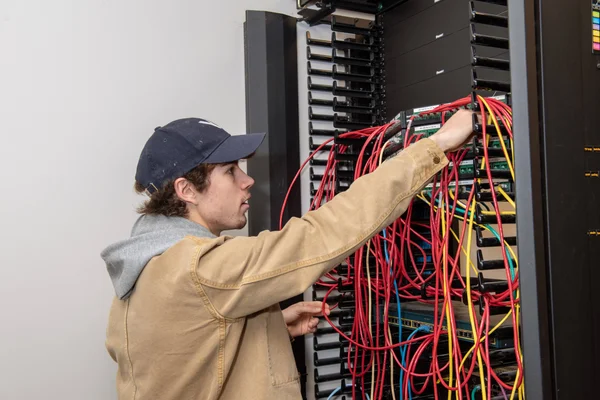
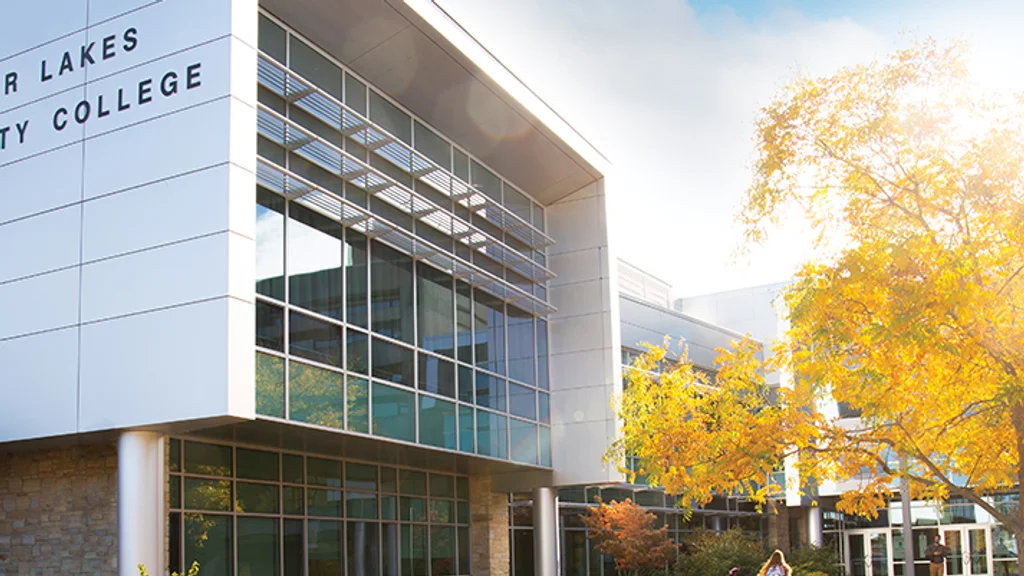
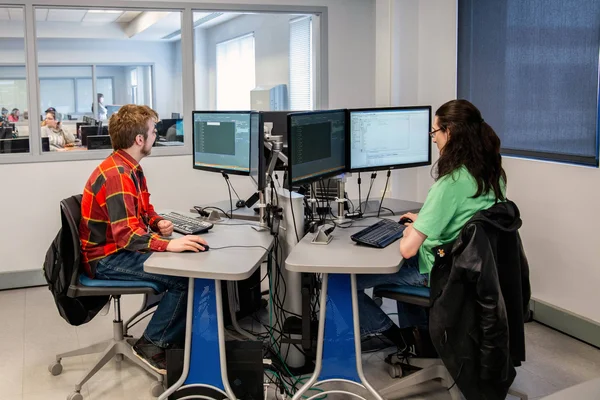
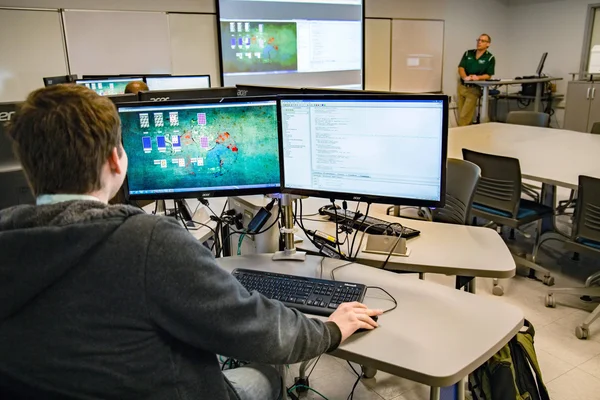
The core classes required for this program take place at FLCC's Victor Campus Center. This facility features a state-of-the-art lab that offers hands-on experience with networking and cybersecurity industry concepts, technologies, and techniques.
Victor Campus CenterWhat Our Students Say
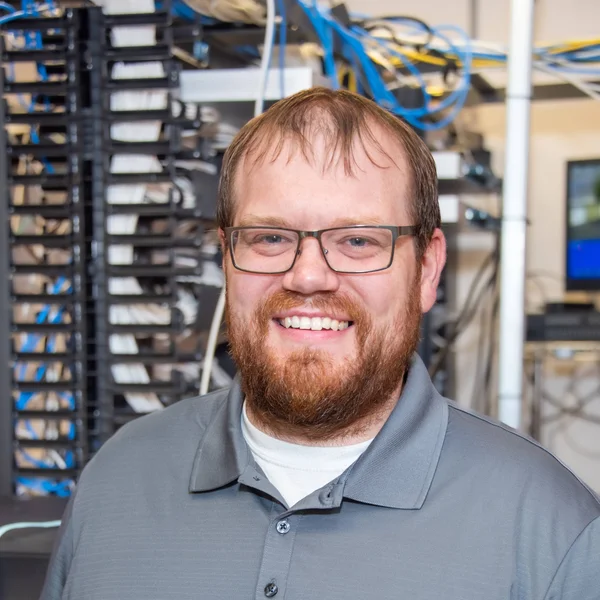
I learned so much more at FLCC than I could have dreamed — and not just about IT, but about the field that I would be entering. Professor Weissman is everything you want and need from a professor. He has an ability to teach to everyone with great understanding and pushes you to understand the real world and the career field. He pushes industry certifications and their importance. Before graduating from FLCC, I obtained my CompTIA Network+, Security+, Cisco CCNA Routing and Switching, and IPv6 Forum Certified Engineer (Silver) certifications.
Low-Cost Tuition and Scholarship Opportunities
Earn an affordable SUNY education at FLCC. With low in-state tuition, financial aid, and scholarships that can help reduce your program costs, you can make a confident plan to pay for college. Our financial aid team can help you review your estimated expenses and the steps to apply for aid.
$5,616
annual in-state tuition ($234 per credit hour).
Review Costs and Tuition
81%
of students are eligible for financial aid or scholarships.
Browse All Scholarships
$23M
in financial aid was awarded to our students last year.
Learn About Financial Aid
Explore Our Related Programs

AI Integration Specialist

Architectural Technology

Biotechnology

Cloud Computing

Computer Information Systems
Computer Science

Engineering Science
Game Programming and Design