Study abroad leaves a mark – in more ways than one
Students share how this past summer’s experiences in Sicily and South Africa affected them.
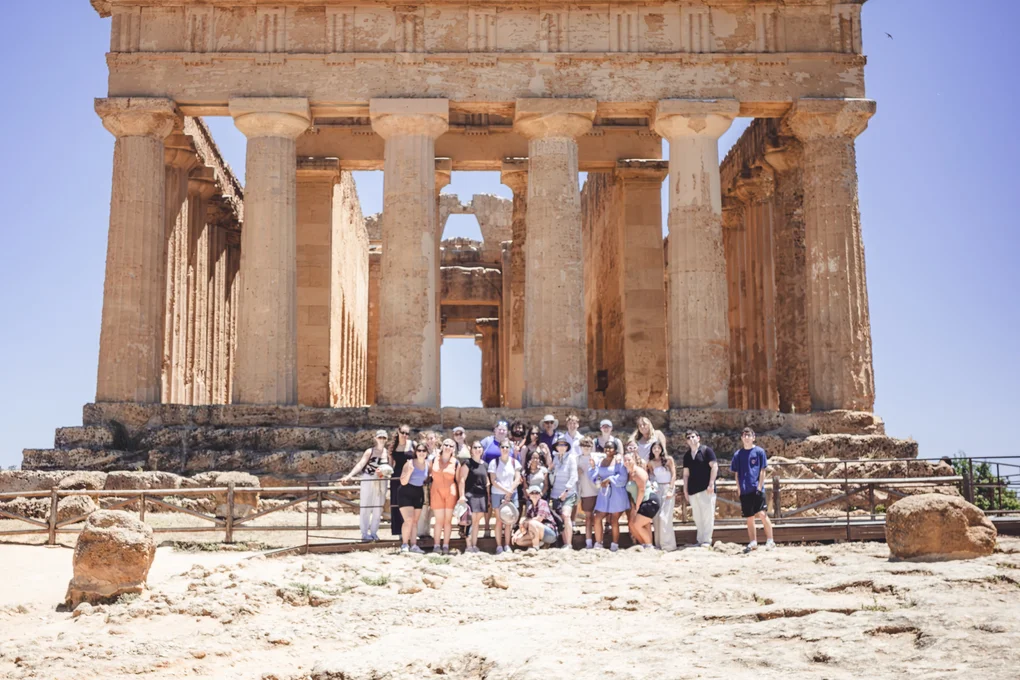 Members of the Sicily study abroad group pose in front of an ancient temple.
Angela Monaco’s study abroad experience in Sicily left an indelible mark.
And that is not a figure of speech.
Angela was so moved by her 5-week experience, she had the outline of the island at the base of Italy’s “boot” tattooed on her lower leg.
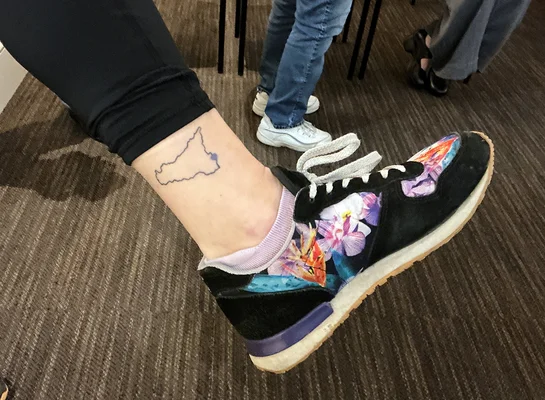 Angela Monaco had the outline of Sicily tattooed above her ankle.
It is one thing to read or watch videos about soaring Greek temples, bursts of ash from Mount Etna and the aquamarine Mediterranean coast. It is another thing to stand among such wonders.
“It makes you feel so small. You are a speck in the universe,” she said. “There wasn’t a day that went by I didn’t thank the universe for letting me be there.”
Study abroad options
Angela, a health care studies student from Naples, shared her experience earlier this fall during a community presentation by the faculty members who led the Sicily trip from late May through early July.
Why Sicily? Mary Delmastro, associate professor of fine art, and Beth Johnson, associate provost of curriculum and instruction, told the audience at Wood Library about its diverse geology and cultural history. Cacti grow alongside vineyards and temples built by Greeks bear hallmarks of conversation for Christian — then Muslim — worship. Students can read the Greek tragedy “Antigone,” then watch it in a Greek amphitheater. All on a triangle-shaped island about the size of Massachusetts.
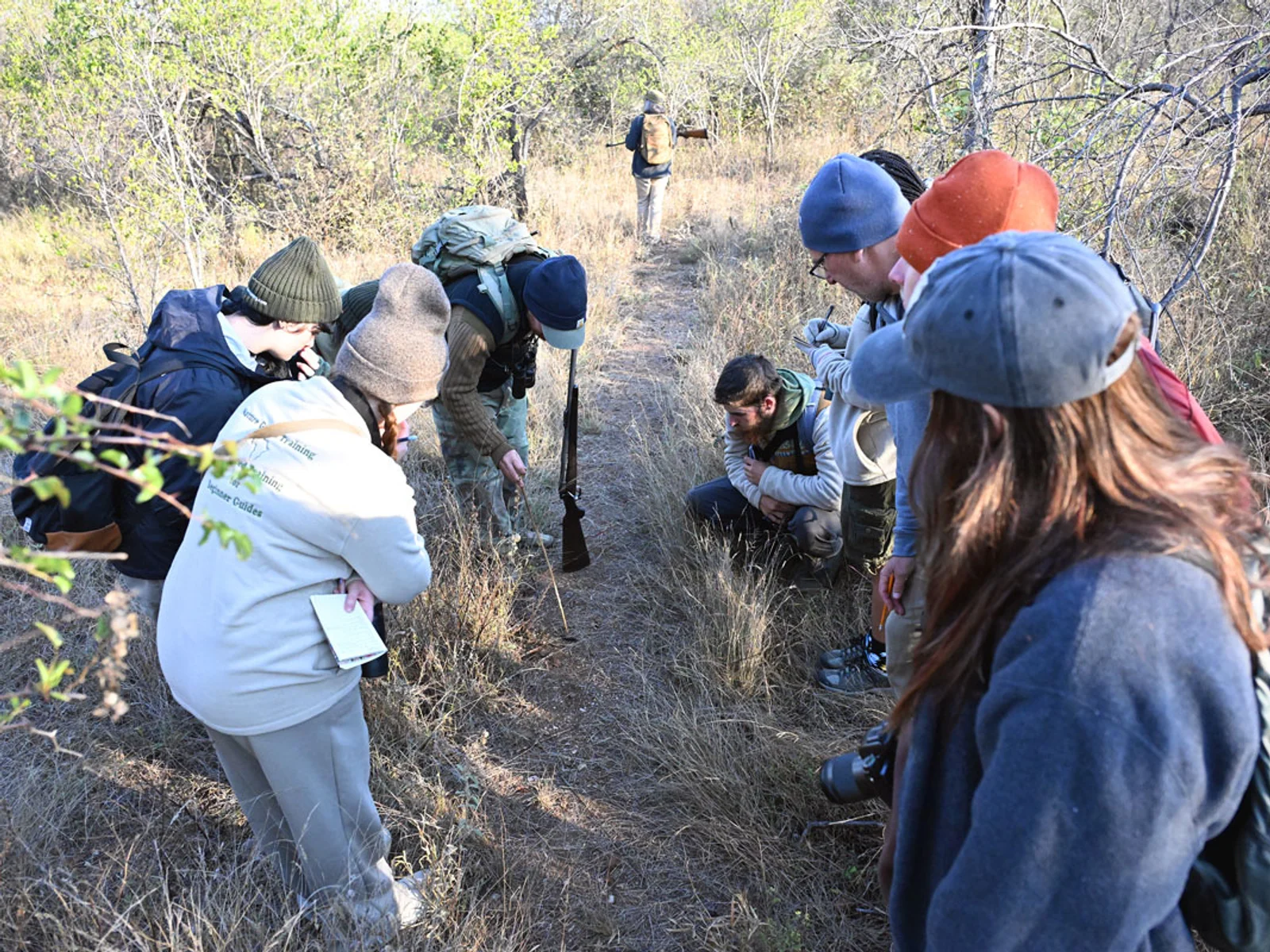
Attendees also heard from faculty who led another study group on a tour of a South African game preserve in July. Professor Maura Sullivan and Associate Professor John Bateman talked about the stories an expert tracker can piece together from a few prints in the ground, scat and other signs.
“Going to Africa changes you in a wonderful way,” said Lynne Sassenhausen, an FLCC employee who traveled to South Africa in 2026. “It changes the way you look at the world. Now when I go on walks, I am looking at the ground and asking, ‘What’s the story here?’”
Signups begin for 2027
The library presentation was more than a travelogue. FLCC study abroad programs are open to alumni and community members. The faculty shared details on upcoming trips, costs, and practical considerations.
The next study abroad experience in Syracuse, Sicily, is scheduled for May 28 to July 3, 2027. Students can earn six to eight credits studying art, history and other topics in collaboration with the MADE School of Arts and Sciences. Registration and a deposit are due in mid-February. The study abroad experience costs about $6,000, plus airfare and most meals. Financial aid is available.
The South Africa ecology and wildlife study abroad program takes place every two years. Information about the summer 2028 excursion will be announced in fall 2027 to students and the community through FLCC’s monthly newsletter. Students earn three credits during the two-week stay in the Great Kruger National Park and learn from experts in wildlife signs and tracking. This past summer was FLCC’s third South Africa trip. Total cost, including airfare, have ranged from $5,000 to 6,600. Financial aid is available.
Study abroad is all about immersion. The sights, sounds, foods and weather are all distinctly different from everyday life in the Finger Lakes.
Dezmond Davis of Canandaigua, who sees buildings that may be one or even two hundred years old at home, said he was fascinated to walk through structures more than 2,000 years old.
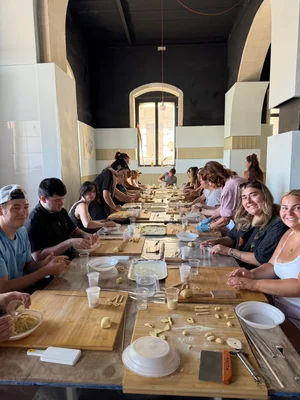 Students try their hands at making pasta.
“One word that comes to mind is gratitude for being there. I saw more than I thought I would ever see in my lifetime in 5 weeks,” he said.
Dezmond had the opportunity to make papyrus, a paper-like material, in the ancient method using strips from the wetland plant.
The shared experience in another culture also builds camaraderie among the group.
With a maximum of 16 students, travelers coalesce into what Maura called a “family of learners.” The topics covered depends on what each new day brings, whether the sighting of a rare black rhino or evidence of a lion’s fresh kill.
Kyle Sassenhausen, who joined his wife, Lynne, on the 2026 South Africa trip, said the group chat created after the 2024 group is still active.
“It’s intense learning,” he said. “It was worth every moment.”
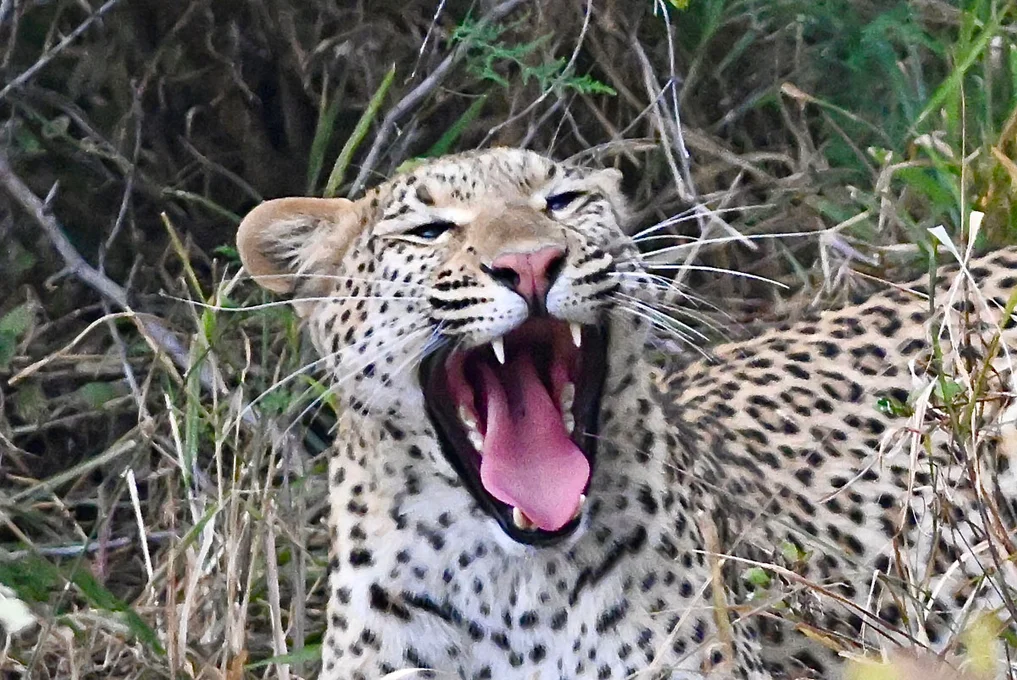 A leopard the South Africa study group encountered while touring the reserve. Photo by John Bateman